Ron and I recently traveled to Dwerja on the west coast of Gozo. As an oval shaped island only 8 miles in length and about 4 miles across, Ron prefers to “feel his way” driving around the tiny island.
On the other hand, I am a deep and grateful devotee to my GPS, who I call Señor GooGEL. This is the name I gratefully dubbed Google Maps after being saved from being repeatedly lost last winter in the streets of Merida.
This navigational difference between us has been the source of many spirited “discussions” while traveling. Ron actually prefers a spiral approach when navigating toward a goal while I prefer to turn on the map, enter the destination and drive to it.
Ron loves the many cul-de-sacs, alleys and spectacular beaches where we accidentally find ourselves. He is so ADAMANT about NOT using GPS that we spend many hours, driving in a manner we recently named Pin-ball Navigation.
Startled locals who find us lost outside their homes act as “flippers” sending us careening along another route. I have met several lovely people this way including an older Maltese man who spent 1952 in Detroit. I met him walking behind the car while Ron attempted to back it up in an impossible alley. To the Maltese man’s young grandchildren, Kansas was an exotic place.
“Oh….Kansas…..”, they said dreamily with a look in their eyes like I would have for, well, Malta.
Only Ron has mastered right-hand drive, left-hand 5 speed shifting and the hell-no-not-gonna-roll-back upward hill clutch-to-first maneuver. This always leaves me (white knuckled) in the passenger seat.
Side note: You can always spot the Americans and Germans driving on the island because they are the ones signaling every turn with their wind shield wipers.
Gozo is a particular pin-ball navigational challenge as all roads lead to Rabat, the largest city on the island. Rabat is located in the interior of this tiny island. Which means if you are at a beach on the far northern side of the island and wish to visit a beach just in the next cove, you may need to drive inland back to Rabat and then catch the road to Whatever-it-Is-Cove.
That is unless you are willing to skip the GPS and try the most tooth cracking, stomach churning, crater-laden roads on the face of the planet. And still perhaps not even reach your goal in the end.
We have done this. Repeatedly. I would say our success rate at actually reaching our goal though pin-ball navigation is probably 40%. Most certainly, Ron would say 90%.
Many, many times this type of navigation takes us to a shockingly gorgeous place like this.
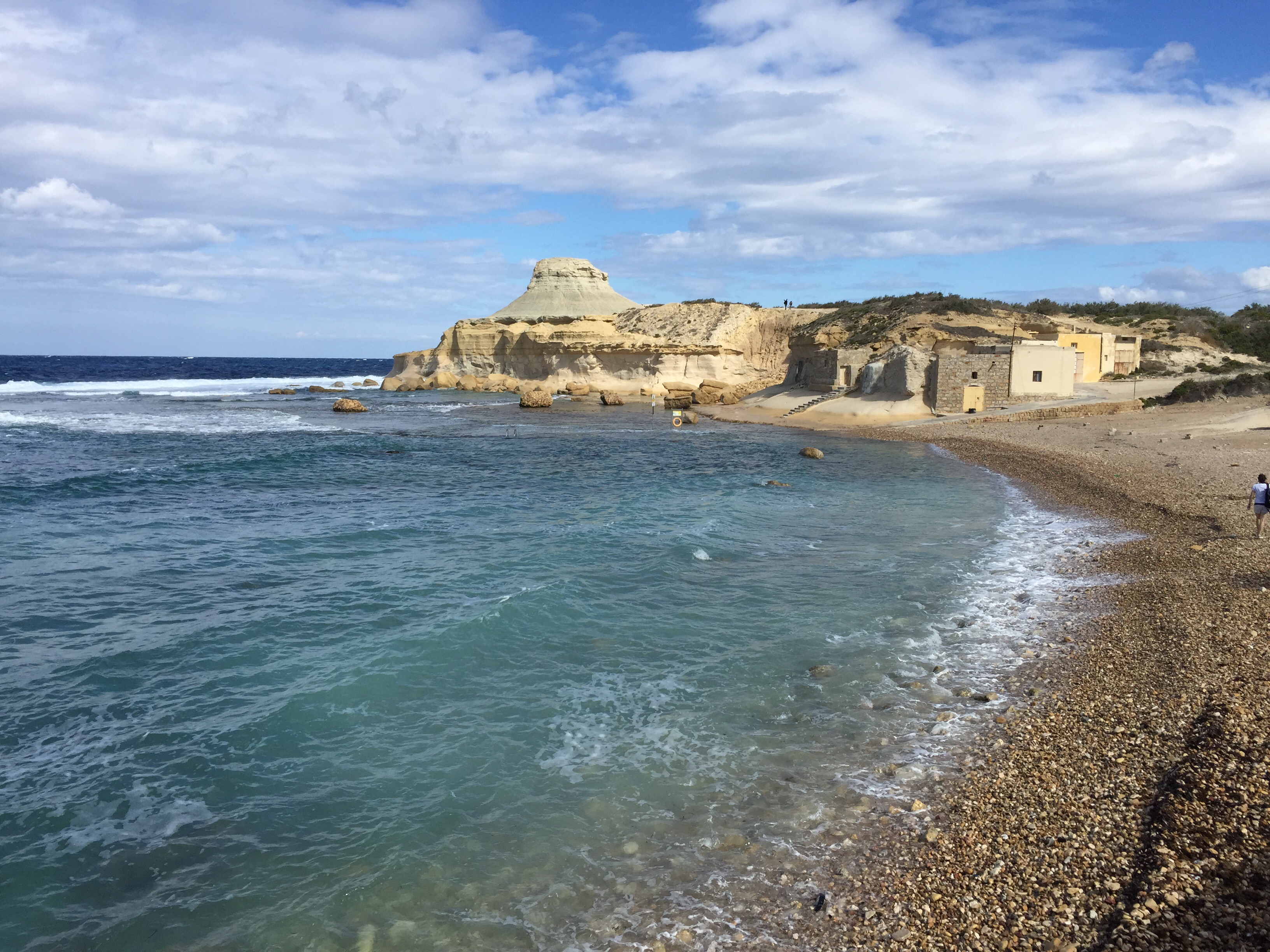
Marsalforn
Other times it has us backing up a quarter mile in an alley like this. And meeting lovely Maltese people.

Way cool Mini tempting us down an alley…
Let me just say, Ron’s style of gut-navigation was born in the logical grids of New York City, and further matured on the again logical grids of Kansas City. With a couple of completely illogical cartographical stops in Boston (horses-can-go-where-no-car-ever-should) and New Orleans (uptown, downtown, lake side, river side, WTF).
So after spending two hours making a 7 mile drive (just sayin’), we finally arrived in Dwerja. One of us was irritated and frustrated, yelling at signs, or the lack thereof.
It was not me. I secretly had the GPS on.
The Azure Window is the top tourist site in all of Gozo. These towering rocks are made of soft Maltese limestone called Globigerina (Go ahead…try and say THAT one aloud. Then hope you can work it into casual conversation).
Water has hewn this soft rock into an enormous bridge rising from the deep blue waters and bathed every minute by stunning turquoise waves.
It is AWESOME.
Finally a time when this much-maligned adjective is truly required. This place inspires awe. Lots of it.
As if the geological formations were not enough, everywhere we walked was laden with fossils. Ancient mollusks baked into the rock by millennia of hot sun, water pressure and mystery.
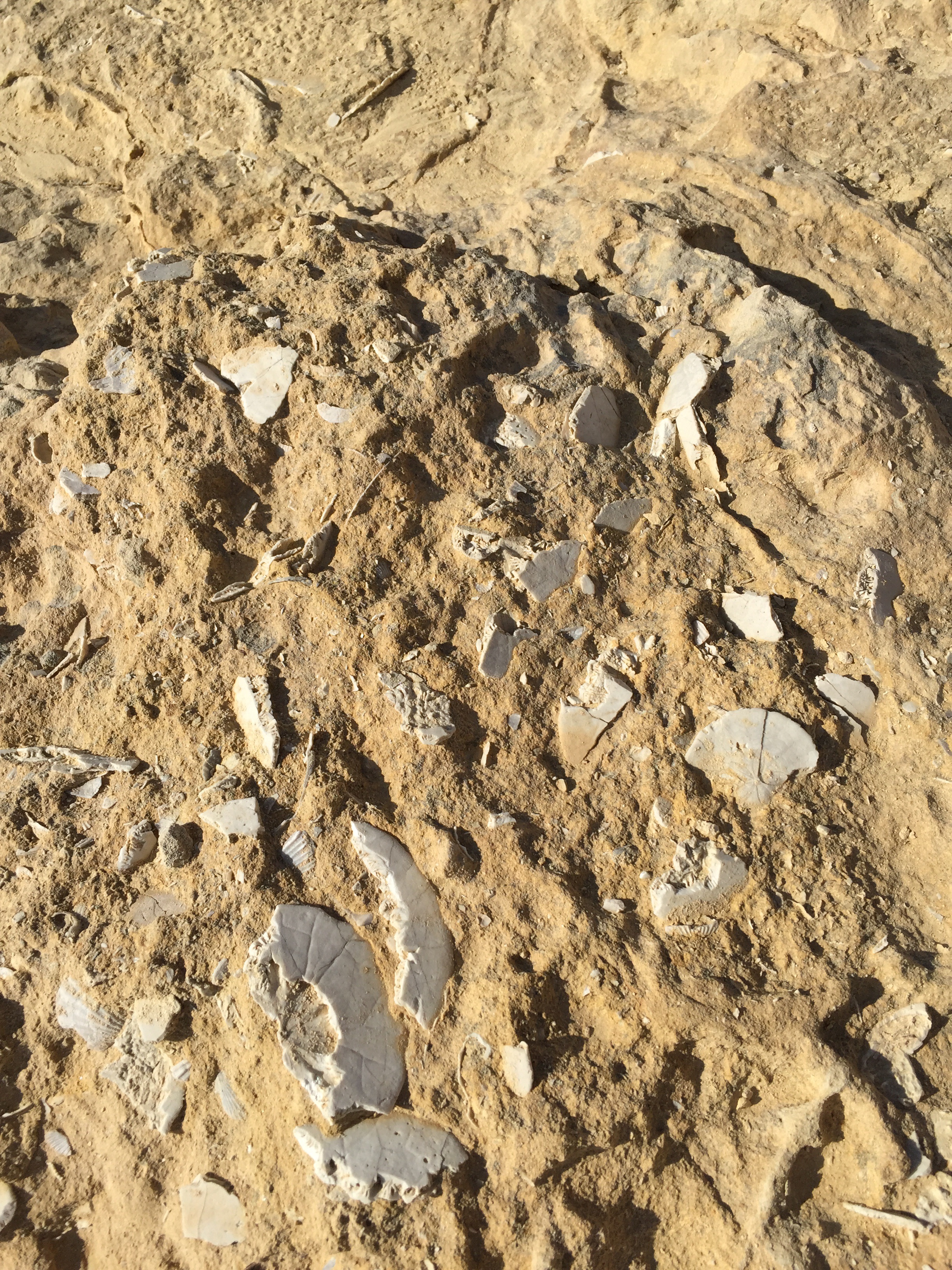
Fossils, fossils, everywhere!
As I walked along the water’s edge accompanied by a large representation of Europe’s travelling public, I overheard a British couple ask “should we be permitted to walk on all these fossils?”
I thought about this with some alarm.
But when I returned to our house in Qala, I noticed them in the pavers along-side the pool.
Fossils are everywhere.
The fossils in Dwerja are from the Miocene period, 7-23 million years ago. And they are built into flooring, quarried into stone for the housing and pavers for streets and sidewalks.
When you visit Dwerja, because you surely must, be certain to wear your hiking shoes. No one else will be wearing them and you can escape the crowds this way. The rock along the sea varies from bubbly black spikes with nary a place to put your foot down to flat expansive ancient coral laced apricot stone.
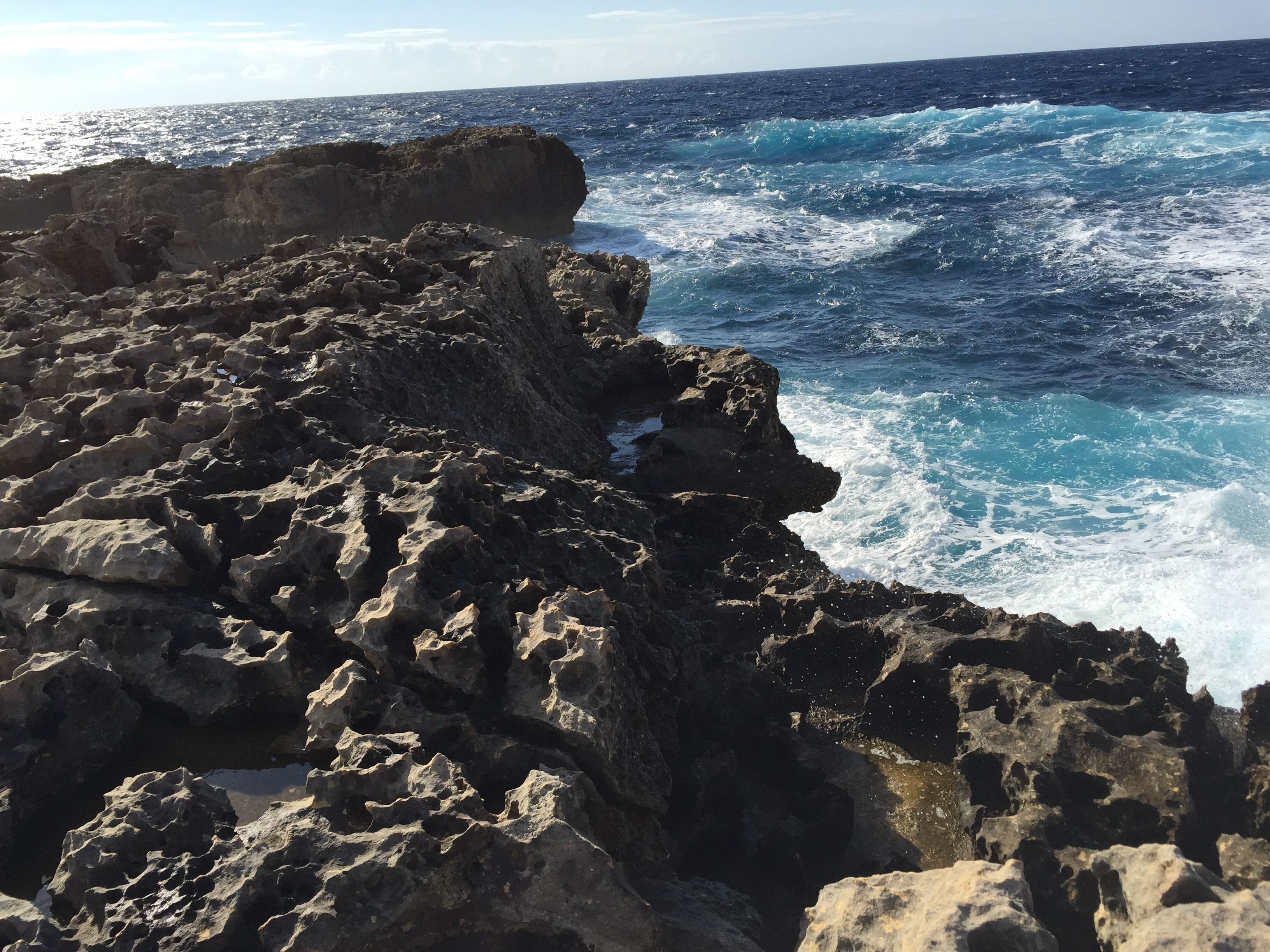
The black rocks make footing difficult.
But here’s the thing, the black bubbly stuff is REALLY hard to walk on. So if you are wearing your hiking shoes and are at least part goat (as I am) you may find yourself on an amazing outcropping overlooking the sea. But please understand that by standing there you are likely to become someone else’s goal.
“Look, that looks awesome. Let’s go over there where that lady is.”
And when the others finally get to where you are, wearing their sandals, the fact that there is only a one foot space to stand on, and YOU are already standing on it, this will not deter them from joining you. Because they STRUGGLED to get there. And they brought little Dieter WITH THEM.
So now you are helping a 6-year-old in a place where no 6-year-old should ever be. Or their stupid parent. All because you were standing there in your hiking boots when they looked at the horizon.
Dwejra, which in Maltese means ‘a small house’, got its name from a small house that was built above the bay. The house was originally built in 1651 and used to protect a lonely soul sent there by the Knights of Saint John to watch the sea.
He would no longer be lonely today as just about everyone who visits Gozo also visits the Azure Window. So to escape the crowds, you are going to want to walk south along the coast toward Fungus Rock.
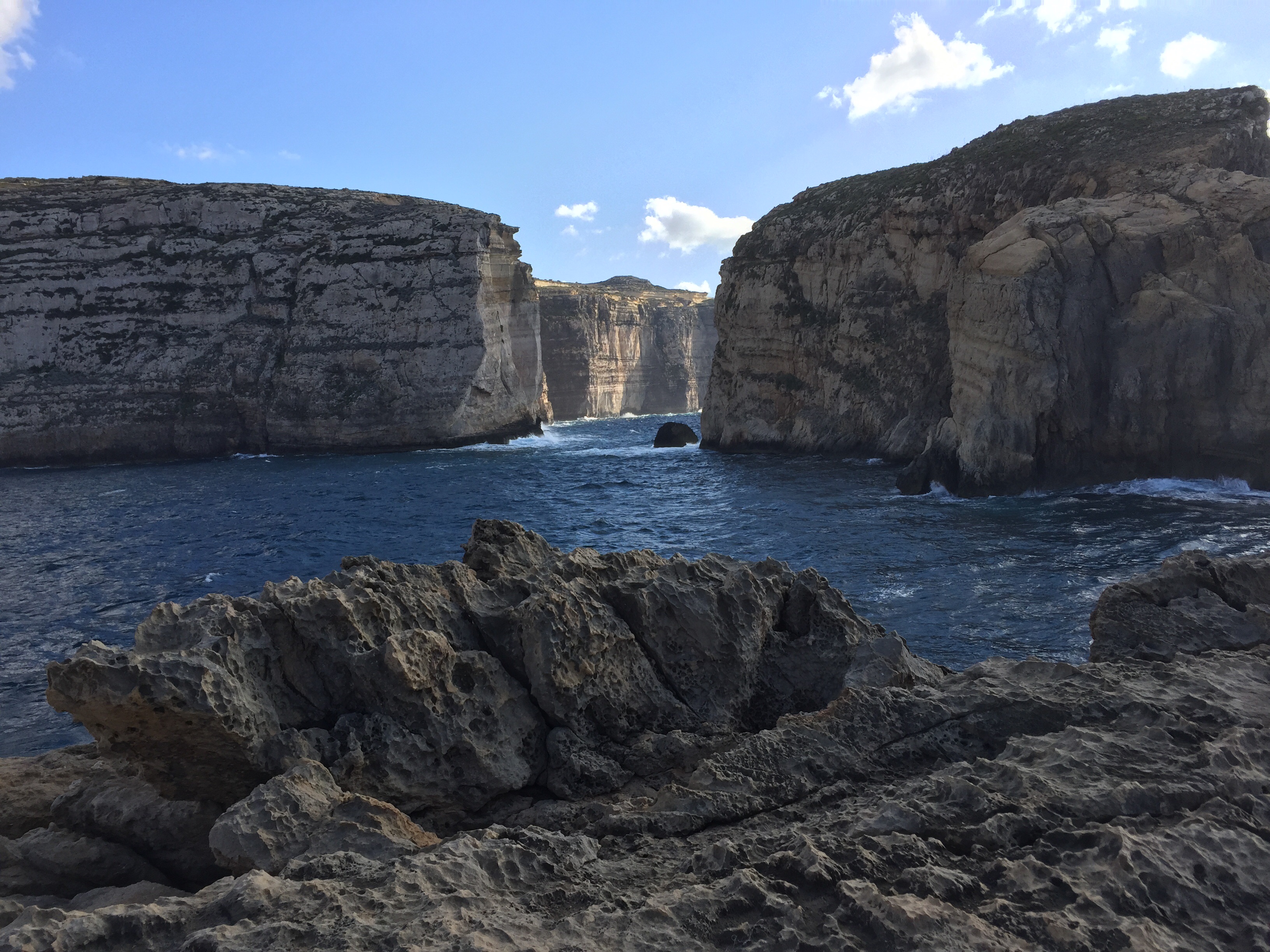
Awesome…
Fungus Rock, a 400 foot high rock is so called because of a plant, cleverly called Maltese Fungus, discovered by a commander of the Knights of St. John.
This rare flowering plant was highly prized by the Knights. They believed, erroneously, that it had medicinal properties. They used it both to dress wounds and as a cure for dysentery.
While Fungus Rock does not seem to be in any jeopardy, the soft rock of the Azure Window arch is disintegrating. Pieces of rock have fallen from the underside of the arch several times over the past decade changing the shape from nearly rectangular, thus the original window name, to more of an arch today.
How much longer the arch will last depends upon who you ask, tourist boards or geologists. Their answers range in years from single to triple digits. In April 2012 a huge chunk fell from the arch. People now are warned by signs not to cross the arch itself. But the signs are largely ignored.
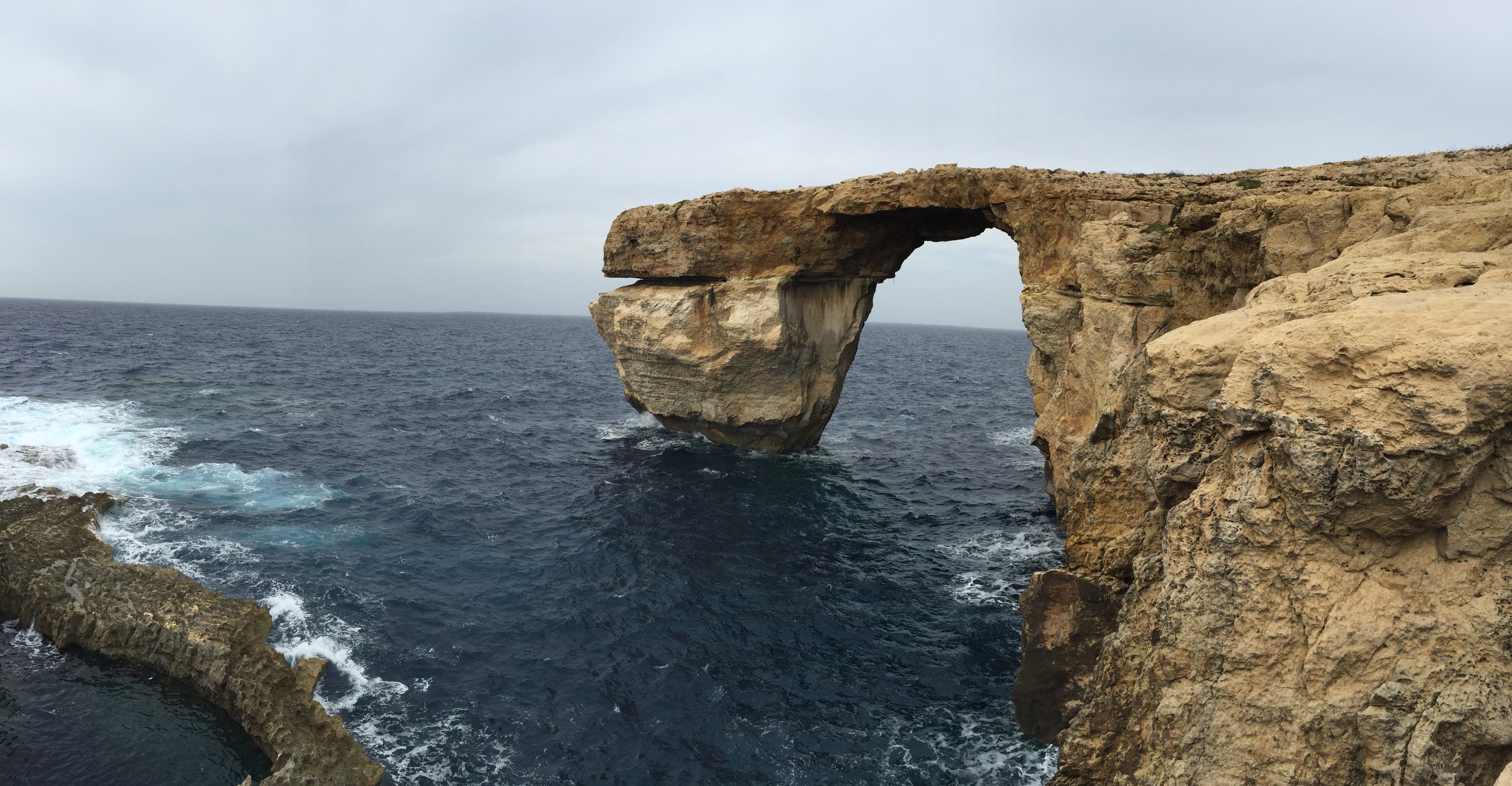
Azure Window
Not by me. Though this would be a very interesting way to bite the bullet.
“Oh my gawd! Did you hear about Sara? She was walking a natural limestone bridge 350 feet above the Mediterranean Sea in Gozo and the whole damned thing collapsed taking her right with it”.
No thank you.
The Azure Window has been featured in many films including Clash of the Titans (1981) and The Count of Monte Cristo (2002).
It was also featured in HBO’s TV series Game of Thrones. You can find places all over Malta where Game of Thrones has been filmed. In fact, there are locals who will take you around to show you all the filming locations, for a fee.
I learned that HBO skipped the country in the dead of the night and has not returned after one particular scene resulted in an environmental controversy. A protected and unique ecosystem was irrevocably damaged in Dwerja.
Apparently the director wanted a sandy beach while many Maltese and Gozitan beaches are pebble-y. A crew laid crushed stone on top of the rock to simulate sand. But they used a permeable sheeting between the original rock and the crushed stone. The crushed stone permeated through the sheeting, bonded with the rock below and obliterated a micro-ecosystem unique to this location.
Cue HBO: sneak out of Malta with Maltese environmental officials hot on their tails.
Game of Thrones fans: when you watch the story of Daenerys being sold into marriage with Khal Drogo, now you know what actually happened here.
In case it ever comes up in casual conversation.
 wanderingawhile